
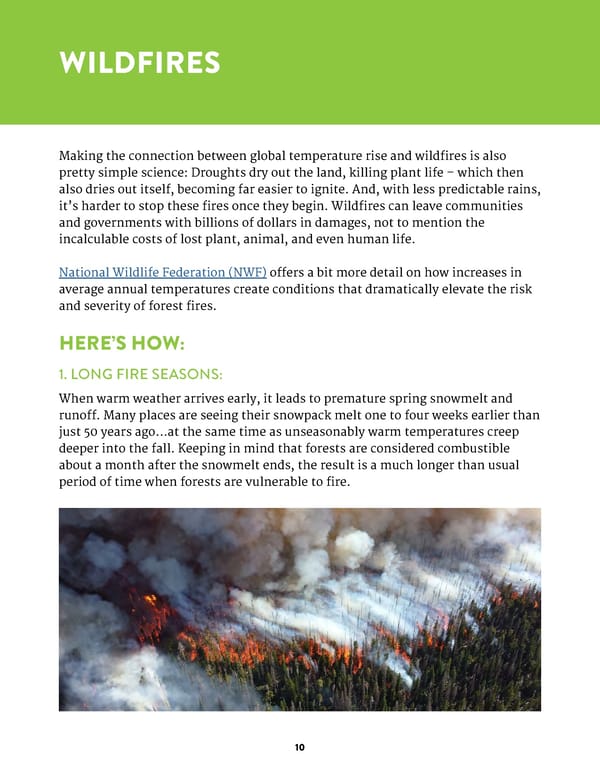
WILDFIRES Making the connection between global temperature rise and wildfires is also pretty simple science: Droughts dry out the land, killing plant life – which then also dries out itself, becoming far easier to ignite. And, with less predictable rains, it’s harder to stop these fires once they begin. Wildfires can leave communities and governments with billions of dollars in damages, not to mention the incalculable costs of lost plant, animal, and even human life. National Wildlife Federation (NWF) offers a bit more detail on how increases in average annual temperatures create conditions that dramatically elevate the risk and severity of forest fires. HERE’S HOW: 1. LONG FIRE SEASONS: When warm weather arrives early, it leads to premature spring snowmelt and runoff. Many places are seeing their snowpack melt one to four weeks earlier than just 50 years ago…at the same time as unseasonably warm temperatures creep deeper into the fall. Keeping in mind that forests are considered combustible about a month after the snowmelt ends, the result is a much longer than usual period of time when forests are vulnerable to fire. 10
 Extreme Weather and the Climate Crisis Page 9 Page 11