
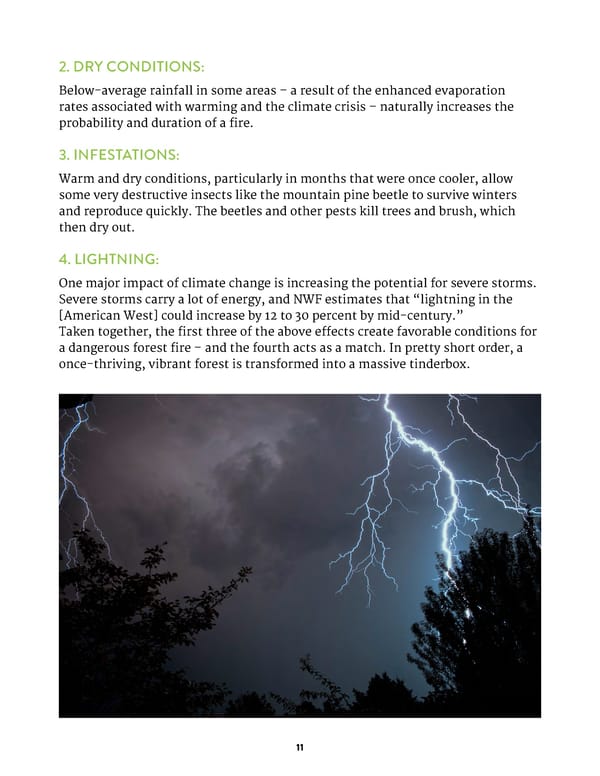
2. DRY CONDITIONS: Below-average rainfall in some areas – a result of the enhanced evaporation rates associated with warming and the climate crisis – naturally increases the probability and duration of a fire. 3. INFESTATIONS: Warm and dry conditions, particularly in months that were once cooler, allow some very destructive insects like the mountain pine beetle to survive winters and reproduce quickly. The beetles and other pests kill trees and brush, which then dry out. 4. LIGHTNING: One major impact of climate change is increasing the potential for severe storms. Severe storms carry a lot of energy, and NWF estimates that “lightning in the [American West] could increase by 12 to 30 percent by mid-century.” Taken together, the first three of the above effects create favorable conditions for a dangerous forest fire – and the fourth acts as a match. In pretty short order, a once-thriving, vibrant forest is transformed into a massive tinderbox. 11
 Extreme Weather and the Climate Crisis Page 10 Page 12