
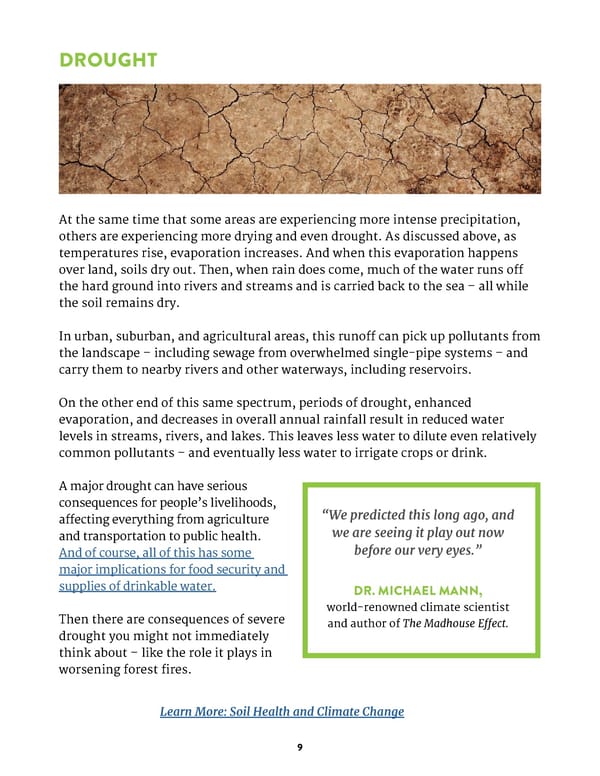
DROUGHT At the same time that some areas are experiencing more intense precipitation, others are experiencing more drying and even drought. As discussed above, as temperatures rise, evaporation increases. And when this evaporation happens over land, soils dry out. Then, when rain does come, much of the water runs off the hard ground into rivers and streams and is carried back to the sea – all while the soil remains dry. In urban, suburban, and agricultural areas, this runoff can pick up pollutants from the landscape – including sewage from overwhelmed single-pipe systems – and carry them to nearby rivers and other waterways, including reservoirs. On the other end of this same spectrum, periods of drought, enhanced evaporation, and decreases in overall annual rainfall result in reduced water levels in streams, rivers, and lakes. This leaves less water to dilute even relatively common pollutants – and eventually less water to irrigate crops or drink. A major drought can have serious consequences for people’s livelihoods, affecting everything from agriculture “We predicted this long ago, and and transportation to public health. we are seeing it play out now And of course, all of this has some before our very eyes.” major implications for food security and supplies of drinkable water. DR. MICHAEL MANN, world-renowned climate scientist Then there are consequences of severe and author of The Madhouse E昀昀ect. drought you might not immediately think about – like the role it plays in worsening forest fires. Learn More: Soil Health and Climate Change 9
 Extreme Weather and the Climate Crisis Page 8 Page 10